
 Technical Features
XDM automates test data operations across enterprise environments. It creates database copies, subsets business objects, masks sensitive data, and delivers reusable workflows through REST APIs, Jenkins integration, Git-based configuration-as-code, and authorization via OpenID or LDAP access controls.
XDM’s Test Data Finder searches for application specific attributes and finds test data that meets the users’ criteria. XDM helps find better test data for the edge cases and more variations for the common test definitions.

XDM’s Test Data Shop has customizable online forms that let users order test data for their test cases and immediately start the test data provisioning process.


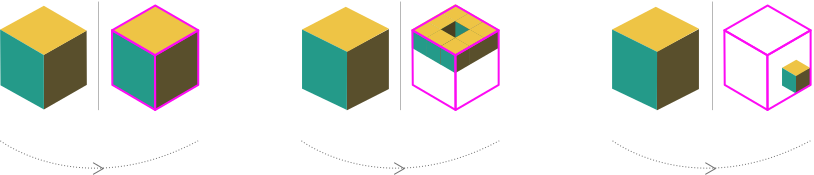 Test Data Pipeline


XDM’s Masking Tool automatically identifies and masks sensitive data. Predefined modification functions and delivered look-up tables for names and addresses constitute a solid base for building individual data masking scenarios. Masking can be applied in-place or to any delivery process.

 State-of-the-Art Technology
XDM supports a variety of databases and data storage systems. Depending on the task configuration, database-specific utilities may be used when moving data to maximize throughput. The XDM tasks are independent of the actual database system.


All processes can be started or scheduled with XDM’s REST API. The configuration can be changed using an import and export feature. A Jenkins plug-in is available.
XDM can invoke other tools via their APIs. These calls can be made before or after the individual steps of a task, or from within workflows.



XDM’s web-based interface makes it easy to get started. A consistent appearance makes it convenient to control the complete functionality. XDM is deployed as a container-based solution and it is running in a Docker or in a cloud environment like Kubernetes.