3 Core outcomes
Safer non-production data, faster delivery, and repeatable workflows across teams and environments.

UBS HAINER TEST DATA MANAGEMENT
Safer non-production data, faster delivery, and repeatable workflows across teams and environments.
Reduce manual effort, improve test consistency, and support privacy requirements without slowing delivery.
Development, QA, automation, DevOps, modernization, and cloud programs that depend on reliable data.
Clear answers to the questions teams ask before they modernize test data delivery.
Move from an isolated test-data need to governed, repeatable delivery.




From test-data discovery to governed lifecycle management, XDM supports reliable delivery at scale.
Identify requirements, dependencies, coverage gaps, and data suited to each scenario.
Choose production-derived data, targeted subsets, synthetic data, or a blended model.
Apply masking and controlled handling before information is used outside production.
Improve reliability by validating completeness, integrity, consistency, and relationships.
Replace manual requests with repeatable delivery across environments and pipelines.
Keep environments stable and controlled throughout the test-data lifecycle.
CHOOSE THE RIGHT APPROACH
Applications and testing goals need different levels of realism, privacy, volume, and speed. XDM supports a deliberate choice—not a one-size-fits-all production copy.

Use realistic data while applying safeguards appropriate for non-production environments.
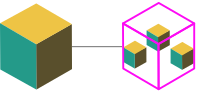
Deliver smaller, relevant data sets that preserve what the test requires.
Create controlled scenarios and edge cases where production data is not the right choice.
Match your database platform and provisioning requirement with the right product.
ALL ENTERPRISE DATA
Data orchestration for distributed databases, including masking, subsetting, synthetic data generation, and repeatable test-data provisioning workflows.
OPTIMIZED DB2 ON Z/OS

Targeted copying and refresh of individual Db2 tablespaces and indexes for routine, smaller-scale downstream test-environment refreshes.
OPTIMIZED DB2 ON Z/OS

Full Db2 subsystem cloning at the volume level for rapidly creating pre-production or golden-copy environments.
Replace unsafe production copies, manual provisioning, and inconsistent environments with governed, repeatable workflows.
Talk to an XDM expertTDM FAQS
Test data management is the process of preparing, protecting, and delivering data for development, testing, QA, and related non-production workflows in a controlled and consistent way.
It helps teams avoid delays, improve test quality, and reduce risk by making usable, safe test data easier to provide across projects and environments.
Teams may use protected production-derived data, smaller subsets, synthetic data, or a blended approach.
UBS Hainer's test data management portfolio covers both distributed and mainframe environments. XDM is a data orchestration platform for distributed databases such as Oracle, SQL Server, PostgreSQL, and cloud targets. BCV5 and BCV4 are built specifically for Db2 on z/OS mainframes, handling high-speed data copying, refreshing, and full subsystem cloning.
XDM supports development, QA, test automation, DevOps, modernization, and cloud programs that depend on reliable non-production data across distributed database platforms.
Both are mainframe tools for Db2 on z/OS. BCV4 clones entire Db2 subsystems at the volume level, making it well suited for creating full pre-production or “golden copy” environments quickly. BCV5 copies and refreshes individual Db2 tablespaces and indexes at the VSAM level, making it faster and more targeted for routine, smaller-scale refreshes of downstream test environments.
Masking is built into the workflow on both platforms. On the mainframe side, BCV5 includes a Reduction and Masking add-on for Db2 z/OS copies. On the distributed side, XDM provides centralized masking and synthetic data generation across supported databases, so sensitive fields are obfuscated before data reaches non-production environments.
Yes, on both platforms. BCV5 and BCV4 jobs on Db2 z/OS can be run manually or through a job scheduler, while XDM integrates with CI/CD tools such as Jenkins for distributed database environments, allowing data copying, cloning, masking, and provisioning to run automatically as part of build, test, and deployment pipelines.